
Why the Heart Knows More Than the Brain
Anatomically, the brain is located above the heart, which is why we are often told to “think with your brain before your heart.” At the same time, when you have a goal, you are often encouraged to “follow your heart.” But who really knows better—brain, heart, or both? Or do you believe that the heart, not the brain, knows better—a theory that has even been suggested to have some scientific basis? Have we been misled for years into thinking that the brain knows better than the heart?
CARDIOVASCULAR
Sheryl Aguelo
1/5/20262 min read
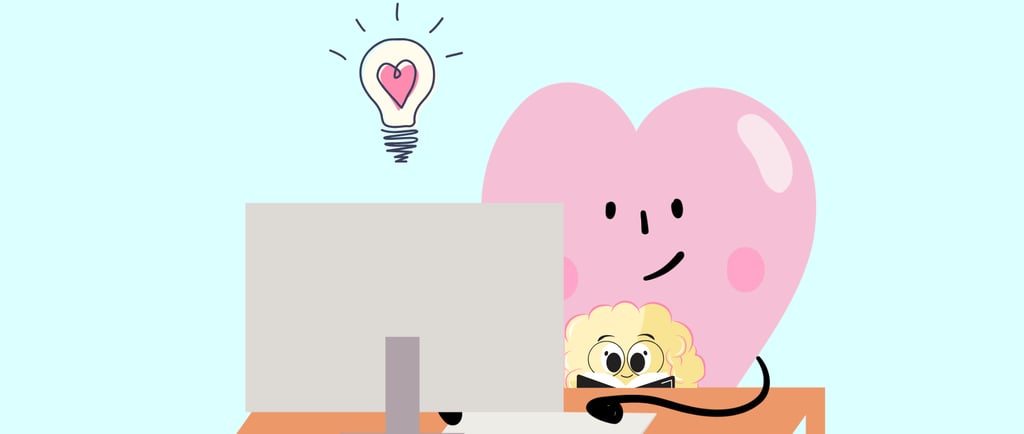

Since I was young, I often neglected my emotions. I rarely had crushes, and when I did, they faded very quickly. Sometimes I suppressed my feelings so they wouldn’t distract me from my studies. I didn’t understand why others had so many crushes, especially while I was still studying, as I felt it would interfere with my focus. I’ve always wanted to use my brain rather than my heart when making decisions, even though I don’t have a particularly high IQ. Yet I still saw couples who excelled in school while maintaining strong, loving relationships. It amazed me that love could inspire them—completely the opposite effect it had on me at the time.
So, who really knows better—should we follow our heart or our mind? Let’s explore more, from the moment we are born to the insights revealed by scientific studies.
The First Organ:
The heart is the embryo’s first functioning organ, beginning to develop as early as 16 days after fertilization, while the development of the nervous system can be detected around 21 days after fertilization.
Why the Heart Develops First:
The heart forms very early in embryogenesis because the embryo’s survival depends on the circulation of oxygen-carrying blood. The fetal heart is essential for distributing oxygen and nutrients, as passive diffusion—which sustains the embryo during the earliest stages of gestation—becomes insufficient to support continued growth and development.
Personal Experience:
According to Dr. Pearsall, people who have undergone heart transplants experience changes in personality. He shares the story of a middle-aged man who had no interest in opera or classical music but suddenly developed a strong passion for it after his transplant. Later, it was discovered that the heart he received had come from a young Black man who was studying at a music academy to become a classical violinist. This personality change has not been observed in kidney, lung, or liver transplants, and a brain transplant has not yet been successfully performed in humans.
Clinical Setting:
A doctor in the ICU observed that the last organ to stop functioning before a person dies is the heart. A person can be brain-dead while the heart is still beating, but without the heart, life cannot continue, even if the brain is still functioning.
After reflecting on this, it makes me think about how God saved the world. He did not use His magnificent brain and power to save mankind; He used His love for humanity. While this is not a scientific explanation in the worldly sense, it is how I personally connect these ideas—from worldly science to a spiritual perspective—which, to me, feels even more reliable than human science.
References:
The Science Behind Embryonic Heartbeats - A Fact Sheet - Lozier Institute
Functional Neurology by Randy W Beck
Human Heart, Cosmic Heart by Thomas Cowan, MD
DaVeganry
Empowering your health through holistic functional medicine.
DaVeganry
Stay Updated
daveganry@gmail.com
© 2025. All rights reserved.