
Do Plaques and Clots Really Cause Heart Attacks?
A heart attack is not caused by a blockage of blood flow in the arteries due to plaque, thrombosis, or a clot. Rather, it results from the death of heart muscle cells, which leads to a heart attack.
HEART ATTACK
Sheryl Aguelo
1/26/20262 min read

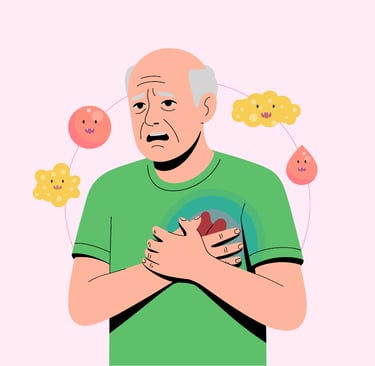
Heart disease is often referred to as events or conditions that occur in the coronary arteries, which can block blood flow to the heart and lead to a heart attack. These conditions include angina, unstable angina, and myocardial infarction. However, heart disease is better understood as a series of events occurring in the myocardium (heart muscle) rather than solely in the coronary arteries. A more accurate definition of a heart attack is an event that leads to the death of heart cells (myocardial cells), resulting in tissue necrosis.
In conventional understanding, a heart attack, or myocardial infarction, is thought to be caused by progressive blockage of the major arteries supplying the heart due to cholesterol plaque buildup, thrombosis, or clot. This blockage reduces blood flow to certain areas of the heart, leading to oxygen deficiency and chest pain. The typical treatments include clearing the blockage through angioplasty, placing a stent, or performing coronary artery bypass grafting. However, bypass surgery primarily relieves symptoms and does not prevent future heart attacks. While considered a gold standard, its long-term benefits are limited.
Below are the reasons why:
Collateral Blood Vessels:
The real event that happens in the blocked blood vessels, even if they are blocked about 90%, is that in almost 100% of cases they are completely compensated by collateral blood vessels. The heart gets blood supply not only from the four major blood vessels. These collateral blood vessels are present from birth. In a study of individuals with a single artery blocked, the researchers were surprised that fewer than 10% had a heart attack in the area of the heart supplied by the originally blocked artery. When a person suffers a heart attack, there is a formation of a blood clot within a vessel, but it is not the cause—it is just a consequence of the heart attack.
Angiogram Error:
The angiogram, which requires injecting dye into the artery, can cause a muscle spasm that narrows the vessel’s diameter, but the plaque itself remains the same. This narrowing is due to the spasm caused by the test itself. For example, if there is a 50% blockage, it may appear as 70%. Therefore, this is not a highly reliable test for determining whether a patient is qualified for bypass surgery.
No Oxygen Deficiency:
Another common cause of a heart attack is ischemia, which cuts off blood supply and, therefore, oxygen to the myocardial tissue. However, assessments of oxygen levels in myocardial cells during a heart attack show no oxygen deficit. The oxygen levels do not change at all throughout the entire event. Thrombosis is also not a direct cause of a heart attack, since it occurs only after the heart attack.
Therefore, a heart attack is caused by the death of cardiac muscle cells. This is due to a reduced parasympathetic nervous system, which has been observed in heart attack patients. The more severe the heart attack, the greater the reduction in parasympathetic nervous system activity.
Reference:
Human Heart, Cosmic Heart by Dr Thomas Cowan
DaVeganry
Empowering your health through holistic functional medicine.
DaVeganry
Stay Updated
daveganry@gmail.com
© 2025. All rights reserved.