
Can Chlorophyll Replace Blood Transfusion?
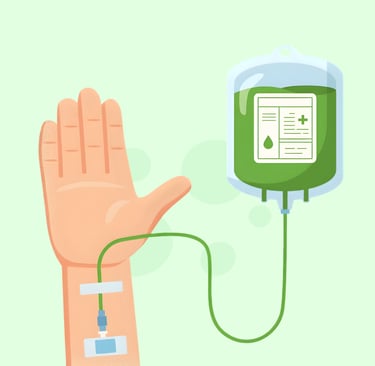
Blood transfusion is an effective and often life-saving intervention for managing blood-related conditions. However, in some individuals, it leads to adverse reactions, including long-term allergic responses. This raises an important question: are there safer and simpler approaches to increasing red blood cell levels while minimizing the risk of such reactions?
CARDIOVASCULAR
Sheryl Aguelo
4/13/20262 min read

In “Biochemical Pathways”, by Gerhard Michal, one concept that stood out to me is the process of hemostasis, the body’s natural method for stopping bleeding after a blood vessel is injured.
The text clearly explains the normal steps involved in hemostasis but does not explore the factors that speed up or slow down this process. This gap led me to consider whether chlorophyll could play a role in enhancing the rate of healing by supporting faster hemostasis. It also raised a related question: could chlorophyll offer any benefit for individuals experiencing blood loss, possibly reducing the need for transfusion? Dr. Bernard Jensen, in his own work, refers to chlorophyll as “nature’s greatest healer,” which further encouraged me to think about its potential therapeutic value.
Chlorophyll, the green pigment in plants, has been discussed for its possible role in supporting blood regeneration and hemoglobin formation. Dr. Bernard Jensen wrote that green leafy plants can help wounds heal faster, and Dr. Rudy Davis claimed in a lecture that chlorophyll-rich juice can act like a blood transfusion when taken before sleep. He also said soldiers once used leafy plants on wounds when blood transfusions were unavailable. Dr. Davis added that chlorophyll’s structure is similar to a blood cell. Dr. Alex Vasquez noted that papaya leaf juice taken for three days raises platelet counts in dengue-related hemorrhage cases.
Blood transfusion is not a perfect solution, as some people experience allergic reactions even with correct blood typing, as happened to my mother during a surgery years ago. Because of cases like this, it is fair to ask whether green juice could serve as an alternative without those risks. In the Philippines, small cuts are often treated with backyard moringa leaves, as they help blood clot and stop bleeding more quickly. Green leafy vegetables are also commonly recommended for people with anemia. However, current research indicates that chlorophyll cannot replace the oxygen-carrying capacity or volume-restoring function of blood transfusions. As a result, scientists continue to develop and study safer synthetic alternatives for clinical use.
Chlorophyll as a possible alternative to blood transfusion still faces resistance from authorities, while expensive oxygen-based treatments continue to move forward. Some people share positive experiences with chlorophyll. I hope there will be more well-designed studies in the future to better understand its safety and benefits.
DaVeganry
Empowering your health through holistic functional medicine.
DaVeganry
Stay Updated
daveganry@gmail.com
© 2025. All rights reserved.